Categories
Construction Rapidways

Yonge at heart

Yonge at heart

At 220 years old, Yonge Street is one of the GTA’s oldest roads, and before it was a road it was likely a trail. Since the beginning, it’s been improved upon and extended. Transit has always been a component of the street, starting with horse-drawn stagecoaches, then streetcars, trains and buses. It’s always been a local road that people walk and bike along, as well as a commuting road for longer distances.

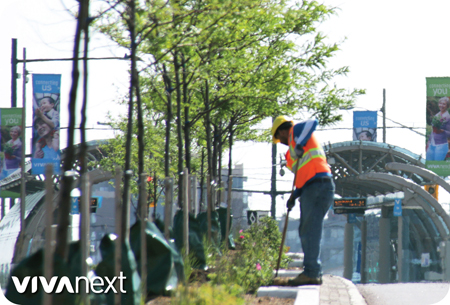
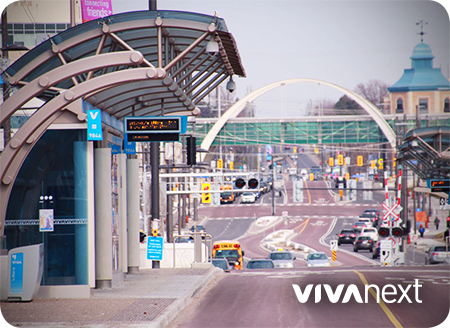
Today, Yonge Street is changing again. We’re building dedicated lanes for transit – rapidways – in Richmond Hill from Highway 7 to 19th/Gamble and in Newmarket from Savage Road/Sawmill Valley Drive to Davis Drive. It’s part of a big plan for a seamless transit system in York Region and the Greater Toronto and Hamilton Area. The Yonge Street rapidway will connect to the Highway 7 rapidways leading to Markham and Vaughan, and to the future Spadina Subway Extension and Yonge Subway Extension.

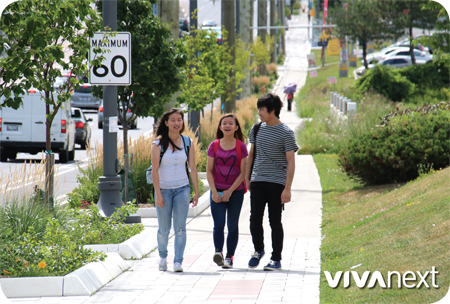
Once complete, Viva service along Yonge will have faster and more reliable travel times, and traffic congestion will be reduced. Modern transit will be on the doorsteps of people living and working along Yonge Street, and the tree-lined sidewalks and bike lanes will make Yonge an even more attractive, vibrant place to walk, shop and ride.  With people at all stages of life using this important street, transit continues to play a key role.

There is a lot of work happening in 2016, and we’re keeping everyone informed. You can find facts and maps on the project page on our website, and we’ll be at some local community events this summer. We’re also on Twitter and Facebook, and we have some project videos on YouTube. If you would like to contact us directly, our Community Liaisons are available to talk. If you sign up for email updates, we’ll let you know when work is happening and you’ll receive announcements, project newsletters, and an invitation to an open house we’ll be hosting later this year.

 

Categories
Rapidways Safety Video

navigating the rapidways

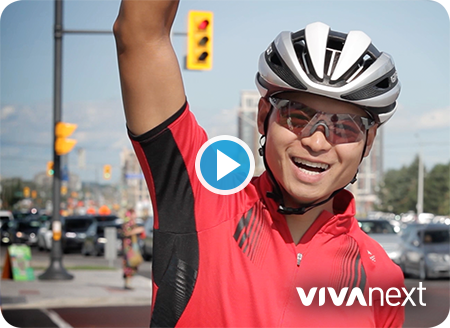
click here to see the video -- rapidway intersections: safe journeys

Safety on the rapidway is everyone’s responsibility, and at vivaNext, we take it seriously. But that doesn’t mean we can’t look at an important topic in a light hearted way. You’ll need to watch our latest safety video to fully understand what we mean, but one thing is certain: you’ll be able to relate to one of our four travellers as they navigate our roads with Viva rapidways.

Motorist Molly, for example, needs to get to her mid-block destination, but gets stuck waiting for a left turn signal. What could be causing the problem?

Cyclist Cedric also has a turning concern while on the move. When travelling on dedicated bike lanes, making a left turn can be tricky business. Must he merge into dangerous traffic to get to the left turn traffic lane? Or is there an easier way?

Pedestrian Percy and his grandfather need to be fully aware of their surroundings when crossing the street, whether it’s to the vivastation in the centre lanes, or continuing to the other side.

However you get around, it’s important to understand what everyone else is doing to make sure your journey is a safe one. Watch the video, get to know the new surroundings, and take care when you’re travelling. Davis Drive and Highway 7 now have new ways to navigate, and there’s more to come!


Categories
Urban Planning

building in place >> the best of both worlds

building in place >> the best of both worlds

Earlier this month, the Province of Ontario proposed changes to the four provincial plans that shape how land is used in the Greater Golden Horseshoe: Growth Plan for the Greater Golden Horseshoe, the Greenbelt Plan, the Oak Ridges Moraine Conservation Plan and the Niagara Escarpment Plan. They’re gathering feedback from the public on all their recommended changes to help protect green spaces and farmland.

One of the key changes proposed is an increase in the minimum Intensification Rate from 40% to 60%, to encourage growth in central areas and reduce suburban sprawl. “Intensification” may sound unfriendly but really it’s just re-using space that we already have. We’ve been building on land in York Region for many decades and our population continues to grow, so when a building comes to the end of its life, there’s a good chance the next building on that land will need to serve more people – whether for housing, business or entertainment.

For example, if a one-level plaza has 10 businesses, when it’s time to rebuild it might be replaced with a five-story building with 15 retail and restaurants on the ground level and 15 apartments above. Because there are more business and residential units than there were before, this contributes to an increased Intensification Rate in the area.

By building in place, adding five business units and 15 residential units to this property instead of building 10-20 detached subdivision houses elsewhere, an acre of green space could be saved. If this new development hosts 80 or more residents and jobs per hectare [2.5 acres], then it also helps support frequent transit service [like a Viva rapidway!].

One proposed change from the Province is to require zoning along transit corridors that supports a higher population and walkable communities. This is important to keep the relationship between people and transit on track. Transit systems need lots of people to jump on board, and people living in downtown areas need the option of transit.

By continuing to build in place, our biggest towns and cities will have everything on their doorstep, and green space nearby. Doesn’t that sound like the best of both worlds?


Categories
Rapidways Urban Planning

New book on ‘complete streets’ highlights the Highway 7 East vivaNext project

New book on ‘complete streets’ highlights the Highway 7 East vivaNext project

The Toronto Centre for Active Transportation [TCAT] has recently published a book on street-transformation projects, called: Complete Street Transformations in the Greater Golden Horseshoe. One of the projects they featured is the vivaNext rapidway on Highway 7 East in Markham and Richmond Hill!

The book includes nine different street-transformation projects from southern Ontario that, according to TCAT, “involved redesigning streets to make more space for one or more of pedestrians, cyclists, or transit riders.”

They also present outputs and outcomes of each project. For the Highway 7 East project, they comment on the safety improvement brought by the transformation, the increase in pedestrians and have included a cyclist and pedestrian count in one segment of the street. And, of course, they also note the improvement in transit travel times, with the BRT shortening the average transit rider’s commute by over 30%.

The most recent edition of Novae Res Urbis (GTA), the urban planning magazine, promoted Complete Street Transformations and said this about the vivaNext project:

“By far the most ambitious project highlighted in the book was the $308-million transformation of Highway 7 East in the City of Markham and Town of Richmond Hill. The former provincial highway was transformed into a multi-modal transportation corridor with bicycle lanes and a dedicated transitway. The result was a dramatic increase in the number of pedestrians, cyclists and transit users in the corridor, as well as a 64 per cent reduction in collisions.”

You can download a copy of the book here. The good stuff about the Highway 7 East project starts on Page 11!

Questions or comments? Comment below or email us at contactus@vivanext.com. To stay up-to-date on construction, sign up for email updates at vivanext.com/subscribe.


Categories
Construction Going Green Rapidways

sowing the seeds on Davis Drive

sowing the seeds on Davis Drive

Trees are coming to Davis Drive! Crews are out making their way along the rapidway medians planting trees, shrubs and perennials to create a more attractive, welcoming streetscape. We hope to see buds and shoots blooming all around us in the coming weeks.

To give them the best chance for survival, we carefully choose the species of trees and plants, and plant them in a special planting mix developed by the Region’s Forestry Department, rooted in special soil cells. Even with this great care, nature is unpredictable and sometimes a few don’t make it through the winter. In this case our contractor replaces them under the two-year warranty we have for all of our trees, shrubs and plants. Trees and other green spaces have been shown in studies to have health benefits, build prosperity and increase safety, so they’re an important addition to streets in York Region.

The vivaNext project delivers more than just great transit. With all the plantings on Davis Drive it also reinforces York Region’s Greening Strategy as part of great community design. The strategy promotes actions that support healthy natural environments, and it plants the seeds of inspiration for cultivating sustainable communities.

#ThanksDavisDr!

Keeping with the green theme, May 7 was the Town of Newmarket’s Community Cleanup & Fun Day, and it was a stellar community event! People from all over Newmarket gathered together to pick up garbage and brighten their community by getting involved and getting their hands dirty [gloves were provided!].

We were there to do our part, participating in the morning cleanup and crushing icy snocones for everyone to enjoy. It was our opportunity to say thank you to the people of Newmarket for all their patience, understanding and feedback during construction.

There’s just a little bit left to do before we can call it done, and have a rapid transit system we can all be proud of. Thanks Davis Drive!


Categories
Video

connecting Vaughan – east and west

connecting Vaughan – east and west

We’re building rapid transit in York Region – Bus Rapid Transit and subways – to connect York Region residents and commuters from north and south, east and west. Markham and Newmarket both have east-west rapidway connections, and next it’s Vaughan’s turn. From Yonge Street to Helen Street west of Highway 400, the new vivaNext rapidways will connect travellers with fast, convenient Bus Rapid Transit.

Vaughan Metropolitan Centre [VMC] is a hub of activity and the rapidway project is moving ahead quickly to open between Jane Street and Bowes Road by the end of 2016. Along the rapidway, Viva will stop at vivastations at Creditstone Road and Keele Street. Once the Toronto-York Spadina Subway Extension [TYSSE] opens in December 2017, Viva riders will also be able to connect at a vivastation west of Jane with direct access to the new subway station below, and a YRT bus terminal a short walk away. To see an overview of the project, check out our latest video.

This spring, construction begins on rapidways that will link vibrant communities in the east and west of Vaughan to the transportation options and development in the VMC, and to the rest of York Region.  We know it helps to be aware of what’s happening and when, so we promise to keep you informed and up-to-date along the way. If you haven’t already, be sure to subscribe to email updates for vivaNext projects, and follow us on Twitter.

Categories
Construction Utilities

the murky world of underground infrastructure

the murky world of underground infrastructure

Property ownership and development are generally straightforward concepts: people or businesses own land, including any assets that are built on that land, and only they can decide when and if any improvements are to be made.

But what happens when the property is located underground, and the improvements are being made by someone other than the property owner? Welcome to the murky and confusing world of underground infrastructure, where ownership and decision-making are much more complex than above ground.

Underground infrastructure, which includes gas and power lines, telecommunications, watermains and sewers, is always owned by either a private company or the municipality. But generally utilities are located under roads or sidewalks, or on private property; utility companies typically do not own the land where their utilities are located.

In most cases underground infrastructure is located in the “public right-of-way”, including roads, sidewalks and boulevards. If a utility company wants to make a change to their own infrastructure, such as making a repair or increasing capacity, they need to get municipal approval before any work can be done. This “municipal consent” process is set out in legislation, and ensures municipalities can control and coordinate utility work on public lands or roads. This is critical, especially when utility work requires road closures or detours or will have some other impact on the public.

Municipalities also can set restrictions on when and how utilities can access their own infrastructure, to minimize impacts on the public and protect the municipality’s own infrastructure. For example, a municipality might impose a moratorium on changes to private infrastructure on newly built or repaired streets, so that new asphalt isn’t dug up.

In all cases, our projects spend a lot of time coordinating with utility companies to resolve any conflicts between the rapidway and streetscape elements we’re building, and the multiple utilities using the same space. In many cases, utilities can co-locate, for example telecommunications may share a common duct bank, and be buried next to hydro. Designs for all relocated utilities have to work with our vivaNext design, and in some cases where space is limited, working through the design process to fit in all the elements can be extremely challenging. Municipalities also have views on where they want elements located; the Region avoids locating utilities in their roadway, whereas local municipalities prefer to keep utilities away from the planters.

Once the design is established, a schedule is worked out with the Region or municipalities, specifying how long the utility work will take. Utilities are given a specified amount of time to close lanes as part of the final permit; even if the work is next to the road, lanes often need to be closed to give workers room to work safely. Our design-builders will coordinate construction work with the utility relocations, since only one activity can be carried out at a time in any given place.

The last but very important part of this complicated process is reducing the disruption for nearby residents and businesses. Once the design and municipal consent is complete, the utility and vivaNext community liaison team work with property owners to discuss access to properties while work is underway.

A lot of moving parts need to be coordinated and resolved before any underground infrastructure gets moved, but our teams are committed to coordinating these efforts with everyone’s best interests in mind.


Categories
Community Events Going Green

it’s all about trees >> and numbers >> on Earth Day 2016

Lad with earth day tree

Today, Earth Day turns 46. What does middle age mean for this global environmental event? An exciting theme and an ambitious goal: the Global 2016 theme is “Trees for the Earth”.

And as Earth Day edges closer to celebrating its half-century anniversary, Earthday.org is asking people around the world to plant trees, with the hope of reaching 7.8 billion trees planted by Earth Day 2020.

That’s one tree for every person on the planet!

In Canada, it’s the celebration of the 25th anniversary of Earth Day Canada, and citizens in this country are invited to participate in the #Rooting4Trees ‘pledge and plant’ campaign. The goal is to help grow a forest of 25,000 trees.

For our part here at vivaNext, we enthusiastically embrace and support the goals of Earth Day. Earth Day serves as our annual springtime reminder that we’re on the right track, as we continue building transit treasuring and protecting the natural environment, promoting smart growth, and building vibrant, livable cities, and healthy communities.

Following the theme of trees, very soon, you’ll see crews planting trees, shrubs and greenery along the Davis Drive rapidway and along Highway 7 West in Vaughan.

And in support of the movement to care for the earth – and to thank the Newmarket community for their patience during construction – watch for vivaNext at the Town of Newmarket’s upcoming Community Cleanup & Fun Day on Saturday, May 7.  We hope you stop in and see the vivaNext team.

Happy Earth Day, everyone!

Categories
Going Green Safety

green space = safe space

green space = safe space

We’ve seen reports that support why having greenery around us can increase prosperity, improve health, and now new research says it makes the surrounding area safer.

It’s not so much the trees and shrubs themselves that keep people safe. Having an attractive space attracts people to spend time in the area – and puts more ‘eyes on the streets.’ And green space that appears cared for lets everyone know that someone owns, uses and maintains it. In the case of streets, it’s a sense of community ownership.

Well-maintained green spaces are thought to give an abstract sense of social order, and according to a community greenery experiment in Youngstown, Ohio, the safety and order extends to the surrounding area. There are all types of crime, and you can’t always predict where it will happen, but the pride of place on display with a nice park or streetscape seems to bring about positive behavior.

It’s exciting to see the trees along the Highway 7 East rapidway growing another season of new leaves, and people out enjoying the spring weather on the new sidewalks. We’re looking forward to planting trees this year on Davis Drive in Newmarket and on Highway 7 West in Vaughan.

So trees aren’t just trees. They, and their team of shrubs and grasses encourage health and wealth, and they fight crime in their spare time.


Categories
Commissioning Construction Rapidways

warranty work >> ensuring quality for years to come

warranty work >> ensuring quality for years to come

When you’re building rapidways for generations to enjoy, it’s important to make sure that the end product is what we want.

Everything – from the paving stones on the sidewalk, to the glass in the canopies, to the red asphalt – is tested, inspected and verified by qualified engineers with a keen eye for detail. Anything that doesn’t make the grade is placed on a “deficiencies list” that the builder is responsible to remedy. That’s why you may see occasional construction activity in the first couple of years after infrastructure projects are done.

Project managers of infrastructure projects call this the warranty work phase – an opportunity to catch any issues so that they can be fixed while the infrastructure is still under warranty. It often takes all the seasons in a full year to see how things weather in our climate or perform once in use.

Much like when you buy a new house, it can take one or two years for the foundations to settle, and for you to make note of where the finishes are less than desirable. Then the contractor comes back to fix all the nail pops and cracks in the drywall, fill any gaps in the molding and repaint where necessary. It ensures that you are happy with the work, and you get the most out of your home. Warranty work is the same idea for our facilities, stations and rapidways.

On Davis Drive, we’re starting with the grinding and smoothing out of curbs, fixing paint finishes and filling small cracks, and of course taking note of anything else that needs work.

Whether you’re a regular transit rider, or are considering your first trip on the rapidway, know that we are working hard to provide you with a quality experience and infrastructure that’s built to last.