Categories
Urban Planning

everything at your doorstep

everything at your doorstep

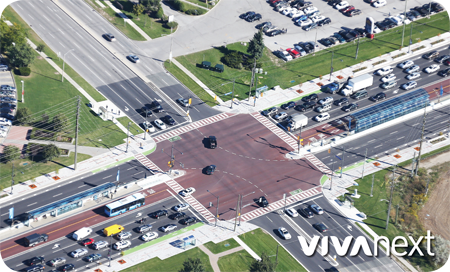
Imagine everything you needed was nearby: shopping within walking distance, doctor’s office right around the corner and a park just up the street. Your work is an easy trip on transit, and there are even places on your street for dinner and entertainment. It can happen, and it’s not just in the big city.

A well-planned community combines residential, commercial and recreational uses in the same area, and this is what planners call “mixed-use.” Transit is a key part of a mixed-use community, because it gets people where they need to go without a car. It also connects us to other areas within the Region. Over time, mixed-use development naturally favours pedestrians and transit riders. This is a style of development that city planners and builders design so that people can have everything close to sidewalks and transit stations, instead of across giant parking lots or wide highways. This type of development creates a more dynamic, people-friendly style of living which had not been available in York Region’s suburban style design of the past. Providing options for living is important, from suburban to urban, because when you can find it all mixed together in one community it allows generations to transition without having to move too far.

In York Region, some of our core areas are now evolving into mixed-use communities, so we’re supporting that change by building a fast, convenient rapid transit system. As part of the Centres and Corridors initiative, York Region has a vision and best practices for new mixed-use development to make sure that is gets built in areas which are supported by higher levels of transit. Markham, Vaughan, Newmarket and Richmond Hill also have their own specific plans for key centres in each municipality. You can see the work taking place by looking for the cranes on the horizon, not a sight you would have seen here a decade ago.

As these areas evolve, buildings will be closer to the road, and closer to shops, restaurants, services, recreation, work and transit. So, it’s really nice to have everything at your doorstep if that is a lifestyle you are looking for – you can now find it being built right here in York Region.


Categories
Construction General Rapidways Stations

signs, signs, everywhere a sign

It seems anywhere and everywhere you go these days there’s a sign of some type that catches your eye. Whether it’s an advertising, traffic or directional sign, it’s meant to grab your attention. The purpose of all the signs out there is for people to watch and read them every day as they pass by, so that you know what is going on in their neighbourhoods.

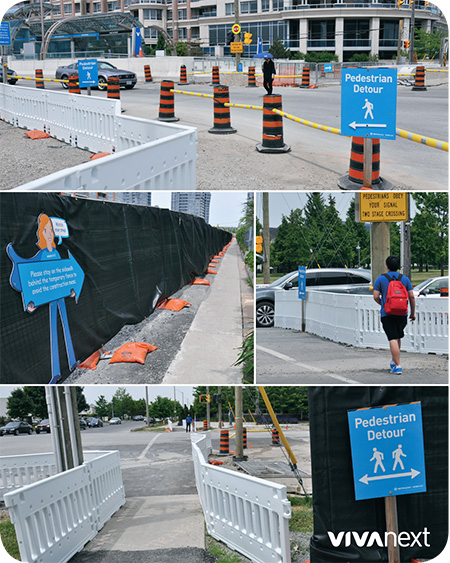
With the large number of signs out there you may become desensitized, but the signs in construction zones are there for your safety. A busy season of road work is underway on several vivaNext projects, so we hope drivers and pedestrians pay close attention to construction markers and signs as they may change daily depending on the work.

For pedestrians, crossing between intersections is tempting. But during construction, it’s especially important to cross at crosswalks – lane closures can change frequently and although construction areas are well marked, drivers may not see a pedestrian crossing unexpectedly.  When large equipment and trucks are working in an area, it is especially confusing if workers are not expecting people in their work zones, so please make sure you are in a safe area, which will be well marked with a sign, of course.

We understand the frustration of being a driver stuck in traffic too, and we’re using large digital signs on the street, to let you know ahead of time about lane closures and detours, as well as providing current travel times.   We hope these signs help you plan your route accordingly and help you manage your travel times.  To receive regular updates about our construction projects, subscribe to our email notices. And for on-the-go traffic alerts about our construction, follow us on Twitter.

Whether you’re biking, walking or driving this summer, we hope you’re enjoying the weather, staying alert and following the signs that keep you safe.

Categories
Rapidways

BRT around the world

BRT around the world

The buzz surrounding Bus Rapid transit [BRT] systems that emerged in the early 2000s has not died down. Cities around the world are continuing to invest in rapid transit projects as an affordable and reliable way of connecting people to job opportunities and leisure activities. As of October 1st, 2013, the transit experts at EMBARQ have reported a total of over 300 bus corridors around the world, spreading to 163 cities across 38 countries.

I’ve discussed BRT systems around the world before, focusing on Curitiba, Brazil and South America’s leading role in rapid transit development. Now, cities in places from Indonesia to South Africa have bus corridors in operation that are positively impacting their growing urban landscapes. Check out some fast-facts on diverse cities who have embraced BRT and view images on our Pinterest board:

Johannesburg, South Africa [Rea Vaya]

  • Hit the road August 30, 2009
  • Rea Vaya means “we are going”
  • 48 stations and 10 median key stations are currently operational on 59 km of trunk routes
  • Commuters stand to save an estimated 73 million hours by shifting to BRT between 2007-2026. The travel time saved is equivalent to over 9 million 8-hour workdays [Embarq].

Brisbane, Australia [Brisbane Busways]

  • Hit the road September 13, 2000
  • A 25 km network of busways, including the South East, Northern and Eastern Busways

Jakarta, India [TransJakarta]

  • Hit the road January 25, 2004
  • First BRT system in Southern and Southeast Asia
  • 12 corridors in operation with over 200 stations along the closed trunk system
  • Carries more than 350,000 passengers daily

Mexico City, Mexico [Metrobús]

  • Hit the road June 19, 2005
  • Transports over 850,000 passengers daily
  • 2,000 days of lost work due to illness were prevented by reducing local air pollution and emission on the Metrobús Line 3 [Embarq]

Istanbul, Turkey [Metrobüs]

  • Hit the road September 17, 2007
  • Approximately 50 km in length and has 45 stations
  • Used by a number of Metrobüs lines
  • Carries around 800,000 people daily
  • In Istanbul, the average passenger on Metrobüs saved 28 workdays per year in reduced travel times [Embarq]


Categories
Rapidways Urban Planning

recognizing great transit

recognizing great transit

As I’ve discussed in a previous blog, huge infrastructure projects involve the cooperation and organization of many parts. Fast, reliable transit systems are not built overnight. Years of design and planning go into a project before construction even begins. You might feel like construction in the vivaNext corridors is never-ending, but remember that these are important transit investments that, in the long term, will drive positive change in our communities.

The plan to promote awareness in the City of Markham was initiated back in the fall of 2001 with the “Great Transportation Debate,” which drew attention to the need for a rapid transit system in York Region. Fast-forward 13 years later to today, where the first section of rapidway is open on Highway 7 and the rest of the ambitious vivaNext projects are well underway.

World renowned environmentalist David Suzuki mentioned our project in a recent article, calling it an “impressive BRT network with rapid transit corridors for a fleet of modern and comfortable fast buses.” He pins the success of the world’s leading cities like New York on government investments in transportation solutions, from light rail and subways to bus rapid transit networks, so it’s exciting to know that cities in York Region are heading in this direction.

VivaNext’s success has been recognized by others as well: earlier this year it was awarded Project of the Year by the Ontario Public Works Association, for a transportation project valued greater than $50 million. The honour is granted to an organization that promotes excellence in the management and administration of public works projects by recognizing the coordination between managing agency, the consultant, architect, engineer, and the contractor.

Also, the York Region Chapter of the Professional Engineers of Ontario chose vivaNext as Engineering Project of the Year. It’s gratifying to have our commitment to excellence and dedication to the vision for York Region recognized by top industry professionals.

With summer construction season well underway, we thank you for your patience as these “impressive” infrastructure projects get built.


Categories
Going Green Live-work-play Urban Planning

building healthier communities

building healthier communities

What if I told you that taking public transit can significantly improve your health? The Toronto Star recently reported on health professionals in the Greater Toronto Area [GTA] who agree that when it comes to land-use and transportation planning, more consideration must be given to encouraging residents to walk, cycle and use public transit.

How our communities are designed influences how we choose to get around, so making transit and active transportation integral to city planning can contribute to healthier, more active lifestyles. Instead of driving your car, choosing to bus, bike or walk to work are alternatives that mix pleasure and health benefits. Also, the article mentions that taking public transit can easily add 30 minutes of physical activity into your day because it can include walking to and from bus stops or subways.

One of the benefits of designing a major infrastructure project like vivaNext is the opportunity it provides to enhance our natural environment wherever possible. In addition to the new rapid transit system, the urban transformation that vivaNext is helping to shape will result in more walkable, people-friendly neighbourhoods that encourage pedestrians and cyclists to get out and enjoy their local environments. What’s great is that residents now have safe choices in how they want to travel.

The new communities in the urban centres will be mixed-use, meaning they’ll offer residential, employment and recreational options. With convenient access between these new urban neighbourhoods and an expanding rapid transit network, people can travel across York Region and into the rest of the Greater Toronto and Hamilton Area [GTHA] without needing a car, making the centres an attractive option for people who want an urban lifestyle within York Region. These new urban hubs will offer walkable, bike-friendly and people-centred neighbourhoods that will be welcoming to people at all stages of life – from young professionals to empty nesters, making York Region a great place to live.


Categories
Construction General Going Green Urban Planning

choosing plants for colour, form and structure

If you’ve ever tried to fit a load of plants from a garden centre trolley into the back of your car, you’ll know that 292 trees and 4,910 perennials and grasses is a lot of plant material.

That’s the number of individual plants that we’ll be installing in the planters in medians and boulevards along our Highway 7 rapidways between East Beaver Creek and South Town Centre Boulevard, from now until the end of June.

As we’ve described in earlier postings, the plant selections were made carefully, and reflect expertise from our Landscape Architects and York Region’s own Forestry Department.  Plants in the planters need to be hardy and strong to be able to withstand the tough conditions imposed by their surroundings.  Not only do they need to be generally low maintenance, but being so near traffic means they have to survive wind, drought and salt-spray in the winter.

Another key requirement is that trees under hydro lines need to be naturally compact so that they don’t conflict with the lines overhead and can grow to their full potential without needing to be pruned.

So the final list was carefully developed with all these requirements in mind, and includes a wide range of trees, shrubs, perennials and grasses.  Trees include Kentucky Coffee tree, Ivory Silk Tree Lilac, and Ohio Buckeye, all of which are well regarded as decorative, long-lived trees.

Tree plantings will also include Skyline Honey Locust and Accolade Elm, both of which are prized as street trees for their vigorous growth and adaptability to tough growing conditions (and in the case of the latter, resistance to Elm disease).  Rounding out the tree selections, the Autumn Blaze Maple and Bradford Pear will provide colour interest and welcome shade.

Along the medians and in the boulevard planters, there is a wide range of grasses, shrubs and perennials which will provide form and colour throughout the year.  Most are familiar to home gardeners, such as varieties of red twig dogwood, shrub roses and Euonymus.  Mugho Pines and various forms of juniper will offer structure to our planters in the winter.  And grasses, daylilies and coneflowers will provide flower interest in the summer.

With all these plants the boulevards and vivastation platforms will be more appealing to pedestrians and transit riders, who will appreciate the shade and colour up close.  But even from a distance, the addition of new landscaping will make Highway 7 much more attractive and pleasant for everyone passing through, and will add to the feeling that this increasingly urbanized corridor welcomes all users.


Categories
General Live-work-play Press Urban Planning

vivaNext goes to school

Recent stories in our local media have described the exciting proposal put forward to York University and Seneca College to locate a satellite campus in York Region. Newmarket/Aurora, East Gwillimbury, Richmond Hill, Vaughan and Markham all had strong submissions that each would offer all manner of benefits to York Region.  On Friday, April 24 they short listed the possible sites to include: Richmond Hill, Vaughan, and Markham.

The fact that these proposals advanced is proof of the increasing urbanization of York Region, especially in its emerging centres in Newmarket, Markham, Richmond Hill and Vaughan.  This increasing urbanization is good news in so many ways, including for young people who would like the option to attend post-secondary school closer to home.

VivaNext is a key part of bringing that urbanization to life.  By extending rapid transit routes into these key areas, a potential new university or college campus would more easily be able to attract faculty and staff as well as new students.  Having rapid transit on its doorstep is just one of the many reasons why these campus bids are so strong.

The long-term vision for York Region is to give people more choices, whether it’s where they live, work, shop or dine out – or go to school.  We’re seeing that vision come to life, block by block, with new developments taking shape all along the rapid transit routes and in the new centres.  And each new development, whether it’s residential, employment or retail, attracts even more economic growth. The new centres are already becoming increasingly important destinations, just as York Region had planned.

VivaNext is proud to be a key part of these plans. We’ll look forward to hearing the news later this spring where the future home of a college or university campus will be located.  And then, it will be our great pleasure to get those students and their teachers to class on time!

Categories
Announcements General

rapid transit is coming to yonge street

The next generation of rapid transit is coming to Yonge Street. We’re excited to announce that York RapidLINK Constructors have been awarded the $260.5 million design build contract for the York Viva Bus Rapid Transit [vivaNext] rapidways along Yonge Street in the Towns of Richmond Hill and Newmarket.

The project involves widening Yonge Street within Richmond Hill and Newmarket to accommodate approximately nine kilometres of dedicated rapidway lanes for viva rapid transit vehicles in the centre of the road as well as 10 new vivastations.

In Richmond Hill, the Yonge Street rapidway will extend 6.5 kilometres from Highway 7 to 19th Avenue/Gamble Road, including seven new vivastations. In the heritage area north of Major Mackenzie Drive, viva will continue to drive in mixed traffic as it does today.

In Newmarket, the rapidway will extend 2.4 kilometres on Yonge Street from just south of Mulock Drive to Davis Drive, and will include three new vivastations. Construction is expected to begin later this year, and be completed by the end of 2018.

This is an important project that will benefit the local economy for generations and will support the significant development and growth of these communities by reducing congestion and providing commuters with a better way to get around.

To learn more about the Yonge Street project and sign up for project updates, visit vivanext.com.


Categories
Construction General

transforming vaughan

VivaNext is committed to designing and delivering an exceptional rapid transit system – one that will help shape growth in our communities, connect York Region’s urban centres and provide faster, more reliable and congestion-free trips. The vivaNext rapidway in Vaughan is more than just a transit project. It also includes urban design elements such as pedestrian-friendly boulevards, wider sidewalks, attractive landscaping, bicycle lanes and green open spaces for the whole community to enjoy. Check out this video and take a ride with us along the corridor to see what is happening.

As you can see, the transformation along Highway 7 West is well underway. Last year, in the Vaughan Metropolitan Centre [VMC] area (also known as phase one of the vivaNext project in Vaughan) crews were busy removing signs, and relocating utilities in preparation for construction.

This year, you will see significant construction activity in this segment. Traffic lanes will be shifted and bus stops will be relocated in order for crews to continue infrastructure work for hydro, gas, storm drains, watermains and begin road widening. Construction has also started on the south side of the Canadian National Railway [CN] Bridge, located west of Keele Street. The bridge surface will be widened approximately 8-metres to accommodate dedicated rapidway lanes, sidewalks and bicycle lanes.

In the phase 2 area east and west of VMC, crews will be working intermittently along the corridor on preliminary construction activities such as soil sampling and other environmental investigations.

Work on the Toronto-York Spadina Subway Extension [TYSSE] also continues this year.  When completed, this subway line will include six stops, 8.6 kilometres of track. Residents and visitors alike will enjoy the mixed-use, transit-oriented development offered in the VMC area, including convenient passenger pick-up and drop-off, a York Region Transit bus terminal, and connection to the Viva rapidway running in dedicated lanes east and west along Highway 7. It will be a great place to work, shop or relax, and getting there will be easy whether you walk or ride transit.

Throughout construction, we’ll keep everyone informed and minimize disruptions as much as possible for those who live, work and commute in Vaughan. For more information on any of these projects, or to sign up for construction notices so you can stay in the loop, visit vivanext.com.

Categories
General Live-work-play Urban Planning

business recognizes the importance of “excellent transit”

Aviva Canada, one of Canada’s largest general insurers, recently made the exciting announcement that they have chosen downtown Markham for their new Canadian headquarters.

This development shows how York Region’s Centres and Corridors strategy, of which vivaNext is a key part, is already resulting in important economic development benefits for our region. It’s more proof that long term, we’re all going to benefit from a visionary planning framework that will channel new jobs, housing and shopping to the newly urbanized downtowns in Markham, Newmarket, Richmond Hill and Vaughan.

And, central to the Centres and Corridors strategy is the vivaNext rapid transit system, which will make it easy for employees and residents to travel conveniently and make transit connections across York Region.   Employers need to attract workers, and one of the things that employees need is access to transit to provide options for the daily commute.

Municipalities that are able to offer easy access to great transit have an important competitive advantage when employers are deciding where to open new offices.  And new offices, and the jobs and prosperity they bring a community, help improve the standard of living for everyone.

As Aviva’s President and CEO company said in their news release, one of the reasons the downtown Markham location was chosen, in addition to all its “incredible amenities”, was that it offers employees access to “excellent transit”.

With the combined policies from all three levels of government – provincial, Regional and local – we’re going to be able to maximize the economic development potential of our new downtowns. Gradually, more and more new developments are going to want to come to these emerging neighbourhoods, bringing with them more jobs and more choices in housing, shopping and entertainment.  And we’re excited that, companies have access to “excellent transit” and recognize it as a key selling point.