Categories
Urban Planning

shifting how we think about transportation

shifting how we think about transportation

One of the great things about huge events like the Pan Am and ParaPan Am Games is seeing how people adjust to the changes the event brings. Leading up to the Toronto 2015 Games, there were some concerns that the Games would cause severe traffic congestion. But thanks to some extra emphasis put on transit and carpooling across the GTA, people have been exploring other choices in how to get around. This, in turn, has likely helped reduce traffic congestion. Whether it’s taking transit, bicycling or carpooling to make use of HOV lanes, every little bit helps.

It’s a shift that takes some getting used to, adjusting to a new routine using a new mode of transit. And it’s this “modal shift” that is so important when developing transit for a growing community.

Most days of the week, many of our roads and intersections are at capacity or beyond. They’re not going to get any less congested as our cities and regions continue to grow, and since there’s limited space in the GTA for roads, there are really only two ways to address congestion.

The first way involves road design, traffic signals and traffic detection systems – known as Intelligent Transportation Systems or ITS, York Region uses this approach to make our existing roads better.

The other approach, which is known to traffic engineers as transportation modal shift but to everyone else as reducing our reliance on cars, is probably the best long-term strategy to reduce traffic congestion. Modal shift means cutting down on the number of trips made by one form of transportation by shifting to other forms of transportation, including transit, cycling or walking.

Modal shift may sound a little technical, or maybe it’s hard to imagine – as if people would get out of their cars all at once and climb onto buses and trains. But really it’s just a matter of small changes in behaviour: taking the bus to the GO station or subway every now and then; carpooling with your co-worker; walking to the convenience store instead of driving; helping the kids bike to school instead of giving them a ride.  All great ideas that the people at Smart Commute and Pembina Institute advocate for.

For successful modal shift, major infrastructure and land use decisions need to be in place, followed-up by investments.  Transit needs to be convenient and reliable; shops and schools need to be within reasonable walking distance; there need to be bike lanes; and jobs need to be located near housing.

Fortunately, all of the long-term decisions and investments that will eventually encourage and enable more people to reduce their reliance on cars are already underway in York Region.  Modal shift away from cars will be able to happen because people will be offered easier, more convenient and reliable ways to get around.

A gradual shift toward other modes of transportation will reduce congestion on our roads. It’s a long-term process, requiring patience, careful planning, and commitment.  It’s also a big part of the vivaNext vision, and with every rapid transit project we build more transportation choices, and the vision becomes an exciting reality.

 

Categories
Community Events

Newmarket Jazz Festival

Newmarket Jazz Festival

It’s already the middle of summer, and despite the heat, we hope you’ve been out in the weather, having fun. This weekend, the Newmarket Jazz Festival is the place to be for great music, fun activities for the kids, and food and vendors of all kinds.

Come out Friday night, 5:30-11pm – for the free t-shirts [first 500 ticket-holders], activities and music on two stages. On Saturday and Sunday from noon to 11pm and Monday from noon to 8pm, there will be more music, a Creative Kids Zone and special performances for the kids.

The vivaNext team will be there handing out scratch ‘n’ win cards, so stop by our booth and chat. And have a happy and safe long weekend!


Categories
economic & financial

when time is money, BRT is priceless

BRT proven to save time, money, and enhance lifestyles

In our busy modern lives, time is our most precious commodity, and for the competitive-minded, cutting time can be exciting.

When living through the construction of a Bus Rapid Transit system, you might wonder if it’s really going to make a difference.  Is it really worth it?

Bus Rapid Transit has been proven to save time and money and even enhance health, according to a 2013 report by EMBARQ, the transportation branch of the WRI Ross Center for Sustainable Cities.

The report – Social, Environmental and Economic Impacts of BRT Systems – looked at four different Bus Rapid Transit projects and quantified things like time lost during construction, improved travel time, reduced transit operating costs and all of the future environmental and public health impacts that come from Bus Rapid Transit. Then they calculated whether or not it’s worth it.

EMBARQ’s analysis used case studies from the TransMilenio in Bogota, Colombia; Metrobús in Mexico City, Mexico; Rea Vaya in Johannesburg, South Africa; and Metrobüs in Istanbul, Turkey.

saving time

We all know that time is priceless. Every minute spent living our lives instead of waiting in traffic is a minute well-spent. Bus Rapid Transit saves time because buses have dedicated lanes that won’t be clogged with traffic. Passengers pay before they board and have near-level boarding, so they’re able to get on and off buses quickly. Traffic signals that give buses priority saves time, and so does the frequent service, because you spend less time waiting and more time getting where you need to go.

EMBARQ found the typical Metrobüs rider in Istanbul saved 52 minutes a day by using Bus Rapid Transit. In Johannesburg, riders save an average of 13 minutes each way.

Imagine what you could do with 52 more minutes in a day!

saving money

Now take the happiness of saving time, and add the satisfaction of saving money – how exciting is that?

For the cities in the EMBARQ report, Bus Rapid Transit is an investment in the future. One of the biggest benefits is reduced operating costs. Mexico City’s Metrobús Line 3 is estimated to have saved $37 million with lower operating costs that come with Bus Rapid Transit. Istanbul and Turkey also have seen significant savings from lower costs.

Here in York Region, we’re already saving time on Bus Rapid Transit. Riders on our Highway 7 East rapidway are experiencing 35% faster travel times. But the best is yet to come, as we grow around a great rapid transit system. Our region’s population is projected to grow from 1.1 million in 2014 to 1.8 million in 2041, and employment is expected to grow from 565,000 to 900,000. We’re building a system of Bus Rapid Transit lanes to move the future of York Region – and help people get where they need to go, saving time and money along the way.

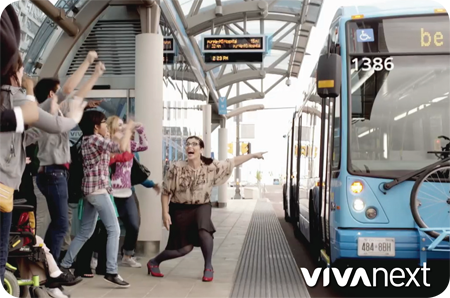
We’ve caught the excitement, and maybe watching our video will help you catch it too.


Categories
Fun & Games

moving the masses: Pan Am and Parapan Am Games rely on mass transit to make it all happen

Get ready, the Pan Am and Parapan Am Games are coming to the Greater Toronto Area!

Get ready, the Pan Am and Parapan Am Games have arrived! This is the world’s third-largest international multi-sport games. That means 250,000 visitors, and over 7,000 athletes converging on the GTA this July and August.

When you want to move the masses, you need mass transit.

Imagine 1.4 million spectators [that’s how many tickets there are for the Pan Am Games] potentially trying to make their way to over 300 events all over the GTA from July 10 to 26. Or 50,000 people all going downtown on a single night to attend the Opening Ceremonies at Rogers Centre on July 10.

Without transit, getting people to mega-events like this would be traffic chaos. The Toronto Pan Am/Parapan Am Games is relying on mass transit infrastructure to make it all happen. Organizers have adopted what they call a “transit-first approach” – doing all that they can to get people to take transit during the Games.

  • Tickets to the Pan Am and Parapan Am Games include free transit with local services such as GO Transit, Toronto Transit Commission [TTC], YRT/Viva  and many more.  Just show your Games ticket and ride for free.
  • Extra TTC and GO train service will run during the Games and subway service will start at 6am on Sundays instead of the usual 9am.
  • Several games venues won’t have parking. [Accessible parking is allowed, but should be pre-booked.]
  • Apps and online tools can help people optimize their transit and driving routes.
    • Triplinx is Metrolinx’s interactive transit trip planning tool, which launched in May, and provides step-by-step, real-time directions for transit riders.
    • 2015 Games Trip Planner provides real-time driving and transit routes during the Games.
    • The ‘Call One’ Call Centre, run by York Region Transit, will allow Games spectators to book specialized transit, coordinating service between GO Transit and all nine specialized transit service providers in the Games area, including York Region Transit Mobility Plus.

Our first rapidway on Highway 7 East in Markham and Richmond Hill is ready for the Pan Am Games. While it wasn’t planned specifically for this event, the rapidway will make travelling to events at Markham Pan Am/Parapan Am Centre near Kennedy Road and Enterprise Boulevard much easier.

Major international events like this will often spur the creation of transit infrastructure. The Vancouver 2010 Olympic Games led to the creation of the Canada Line, a light rail train in Vancouver that connected the city to the airport.

Vancouver Olympics organizers encouraged spectators and commuters to turn to transit during the Games, just as Pan Am/Parapan Am Games planners are doing now.

Transit service in Vancouver experienced record ridership during the Olympics, up 31 percent with an average daily ridership near 1.6 million.

There was also an amazing, surprising after-effect. Once people got used to riding transit, they kept riding, even when the Olympics were over.

Ridership increased by nearly eight percent that year, excluding the Olympics numbers, which was partly due to the new Canada Line, and partly due to people keeping up their Olympic transit habit.

Now that’s a legacy for the future.

For mass events, transit just makes sense. When everyone has so many places they need to be all at once, it’s so much easier to be car-free, sit back and enjoy the ride.


Categories
Community Events Fun & Games

make some #connections this summer

Happy Canada Day!

Happy Canada Day!

It’s that time of year again, as the temperature rises and schools close, we start making plans for the summer. No matter whether you’re planning to take a big vacation or find fun and excitement in York Region, know that Viva is there to make your trips for work, shopping or playing a fast and enjoyable experience.

But on a day like today, we’re concentrating on the fun. Join us at events across York Region this summer in your community.  This July 1, our vivaNext team will be out celebrating Canada Day at the Kanata Summer Festival in Newmarket.

itching for ways to win?

Pick up a scratch ‘n’ win card from our vivaNext team at your next community event. We’ll be handing out vivaNext scratch cards for a chance to win one of 12 PRESTO cards, or one of three iPad Air 2 tablets. Both are perfect for getting you around town or staying connected to the people and places we love most. A PRESTO card is the most convenient way to get around town, connecting YRT/Viva, GO buses and trains, and the TTC with one card! And the iPad Air 2 is equally convenient for business or pleasure with a wide selection of apps to choose from [like this one, perhaps?]. For complete details, visit our website, or go straight to the rules and regulations.

up for a challenge?

For those who enjoy games check out our summer on-line game – another PRESTO card is up for grabs. The highest score wins, so play early and often to better your score. Play the #Connections Summer Game here.

Davis Drive walking tours in Newmarket

Looking for something to do this summer? Show your support for Davis Drive businesses with a short, guided walking tour of the new rapidways under construction. See the progress in action! Best of all, you’ll receive a $10 voucher to use at a participating Davis Drive restaurant on the day of your tour. Space is limited, so please register for a date and time convenient to you.

There is a lot happening around town and we hope to see you out and about this summer. In the meantime, Happy Canada Day everyone!


Categories
General Studies

bus rapid transit is a global phenomenon, up nearly 400% in over 10 years

BRT system is a global phenomenon

At vivaNext, we’re working hard to build a Bus Rapid Transit [BRT] system. And we’re not alone! Our vision of fast, reliable and convenient BRT service is shared by many cities and regions, all over the world.

Bus Rapid Transit is a global phenomenon that has nearly quadrupled over the last 10 years, growing 383% worldwide from 2004 to 2014, according to data compiled by the Institute for Transportation and Development Policy.


buses! buses!

Former mayor of Bogotá, Colombia, Enrique Peñalosa, said it best with his rally cry: “Buses! Buses! Buses! Buses!” That was his response to a suggestion that some municipalities might benefit from a subway.

Indeed, for many cities and regions, BRT simply makes sense. A BRT system can be built at a fraction of the cost and time of a rail system – in the span of a few years instead of a decade or more – and still provide service that can be just as reliable, fast and frequent as a train.

More cities and regions are turning to BRT as their transportation solution, with 1,849 kilometres of new lines added globally in the last decade. In York Region, our contribution was the six- kilometre stretch of rapidway on Highway 7 East! And that’s just the beginning.


32 million global BRT riders every day

Around the world, 32 million people ride BRT every day, according to the global database BRTData.org.  That’s 5,087 kilometres of BRT lines in 193 cities.

The undisputed global leader of the movement is Latin America with nearly 20 million passengers, followed by Asia with 8.7 million. Brazil is the birthplace of BRT, and the country with the largest network of systems; nearly 12 million passengers a day in 34 cities!

Bus Rapid Transit grew the most in China with construction of 552 new kilometres over the last decade, followed by Brazil with 345 kilometres, and Mexico with 234 kilometres, according to the Institute for Transportation and Development Policy.

Closer to home in North America, BRT is a small but growing phenomenon with one million passengers in 27 cities. The United States was fourth worldwide in terms of growth, with 104 kilometres of new lanes built in the last 10 years.


9.6 million annual riders on Highway 7 East rapidway

Here in York Region, we’re working hard to bring the vivaNext vision to life. Our current plan will include 34 kilometres of rapidway once construction is complete, connecting the communities of Markham, Vaughan, Richmond Hill and Newmarket. That includes the six kilometres already running in Markham. We’re also forging connections with the Spadina Subway Extension, and advancing plans for the Yonge North Subway Extension. In 2014, our Highway 7 East rapidway in Markham had 9.6 million riders, so we’re well on our way.

We’re building rapidways but the true end product is something much greater – mobility. Mobility makes everything possible. Because BRT runs in designated lanes it’s not subject to the whims of traffic. When our rapidways are complete, people will know they can rely on Viva service to get where they need to go – to work, to school, and to life.  As our communities grow and roads get more congested, our rapidway system will be ready to meet the growing demands of our region – part of a global movement moving people forward into the future


Categories
Live-work-play

those carefree summer days are here!

those carefree summer days are here

School’s wrapping up and summer’s here! Are you excited? We are. Summer is the time of year when vivaNext gets a lot done. This summer, work on our Davis Drive rapidway in Newmarket is entering the home stretch, and we’re excited to see it taking shape. We’re also widening roads and paving in Vaughan on Highway 7 West, and last but not least we are putting the final touches on our Highway 7 rapidway in Markham in preparation for the Pan Am Games.

Summer is a great time for you to get things done too – important things like swimming, cycling, camping and barbecues.

Warm weather and no school mean carefree days, which is why it’s more important than ever to drive carefully. Children and teens will be running around having the time of their lives. Sometimes they run into the streets without looking, skateboard on busy streets, or do other things you wouldn’t expect. It’s motorists’ job to be extra vigilant, helping our kids stay safe.

In our busy lives, driving sometimes feels like a race from one place to the next. Is it really worth the rush? Sidestepping rules of the road by talking on a cell phone or rolling through a stop sign can be tempting. But, take your time. Slow down and enjoy the summer. Keep your attention on the road and watch for construction detours, speed signs and children.

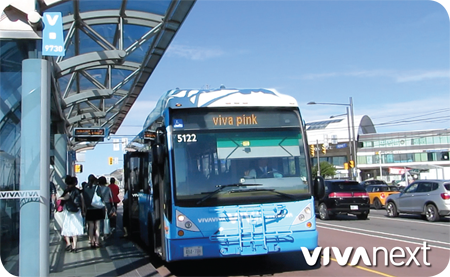
And if you find driving is becoming a little tedious, you can try Viva, which is running throughout York Region. As you know, six kilometres of bus rapid transit are already running in Markham from Bayview to Warden, providing travel times that are as much as 35% faster, so experience it firsthand.  This route will be a fast, convenient alternative to driving your car throughout the Pan Am Games this summer.

However you choose to get around, we hope you make the most out of your summer – drive with care and be safe!


Categories
Going Green

realizing the vision of leafy, tree-lined streets

realizing the vision of leafy, tree-lined streets

Planter boxes and trees are coming to Highway 7 in Vaughan! Along with the paving [have you heard about all the paving?] activity that’s been happening along the rapidway construction, you’ll soon be seeing crews building planter boxes between Jane Street and the CN Bridge.

The arrival of the planters is a big deal – to us and to the neighbourhood – because these structures will be housing trees and plants.

One of the most desirable qualities of a livable neighbourhood is the presence of trees. And at vivaNext, we have very deliberately designed the rapidways with this vision of a tree-lined, livable neighbourhood in mind. Part of our goal with the new boulevards is to bring to life the “complete street” concept – the guiding philosophy for our streetscape design.

As development continues and the population in York Region grows, it means that there will be more people walking and riding along the rapidway routes. So we’ve made sure that our boulevard design is going to be visually appealing as well as functional. And the trees and plants we’ve planted will grow to shade the area for everyone to enjoy.

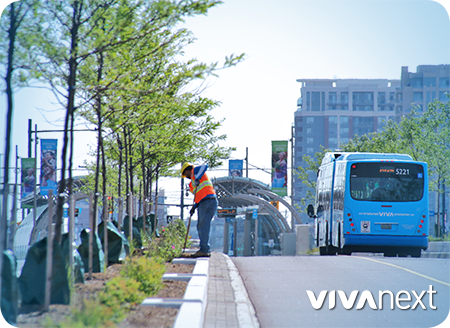
If you want to see how green the Vaughan area of the rapidway will eventually become, take a look at Highway 7 East. The Markham section of the vivaNext rapidway is bursting with growing, thriving trees and greenery, thanks in part to all the sunshine and large amount of rain we’ve had.

However, most of you will probably notice that Mother Nature is getting quite a bit of help along the way. Landscaping crews are currently out there every day, installing planter boxes, planting flowers, bushes, and grasses, topping up topsoil and distributing mulch, planting new trees and replacing the few that didn’t survive the winter.

As you go for a stroll, ride your bike, drive, or take a bus ride along the rapidway[!], be sure to look around you and take in the newly tree-lined greenery-filled boulevard on Highway 7 East.

If you’d like to subscribe to email updates about the progress of the vivaNext project, click on this subscriber link, or go to our homepage at vivaNext.com and scroll down to “subscribe.”


Categories
General

private time on public transit

private time on public transit

The Toronto Star recently ran a piece on how the TTC has become an extension of “home” for its users. While he remarked that some people do things not normally considered polite for public spaces, Urban Affairs writer Christopher Hume also noted that even with less privacy, riders have more freedom.

“Even in a moving subway,” he wrote, “it’s easier to put on lipstick than it is driving on Highway 401. It’s also easier to eat, drink, read and tend to one’s appearance.”

People who use transit regularly use the time in a variety of ways that are either impossible or risky when driving a car. They read books, work on laptops, watch TV, talk to other riders, snooze – and yes, put on makeup or simply stare into space at the end of a busy day.

They don’t worry about being cut off in traffic or being stuck behind a sander during a snowstorm. Parking and finding a gas station are also non-issues, and riders save thousands of dollars a year in car depreciation, gas and insurance. And let’s not forget that they also get tax credits for transit passes like the Viva Monthly Pass.

If you trade your car keys for a transit seat, you might just find yourself with time on your hands!


Categories
Community Events

engaging the community – and listening to you

engaging the community – and listening to you

One of the best things about springtime is how much more we all get outside – and that especially includes the many events in the communities in York Region. From festivals to farmers markets, home shows and other events, it’s important that we’re out and about, talking and listening to you.

In April, many of you visited us at our booth at the Aurora Home Show, where we were able to chat with several hundred people. People were very interested in making sure the Heritage Area along Yonge Street is properly protected – we were able to reassure you of the plans for Viva to continue to drive in mixed traffic through the Heritage blocks, rather than widening the road as in other areas. We also attended the Newmarket Home Show in March to make ourselves available to the community to answer questions and talk about the Rapidway and the construction along Davis Drive. We had some good conversations – this community remains very engaged in the plans and are looking forward to the end of construction!

In May, we were at the Richmond Hill Home Show talking about the Highway 7 East and Yonge Street rapidways, and we shared in the fun at York Region’s Family Fun Day in East Gwillimbury.

Throughout the summer, you’ll continue to see us at festivals and events. And throughout the year, we’ll be talking to business owners, property owners and local communities to ensure everyone is aware of ongoing and upcoming construction activities, and to help you plan ways of dealing with temporary road diversions and lane closures. Because we’re building where you live, shop, work and play, you’ll be seeing Community Liaisons and other vivaNext people at different events and festivals to help keep everyone informed.

Want more information on where you’ll find the vivaNext team? Check out our Community Events page.