Categories
Urban Planning

putting a value on the benefits of vivaNext

putting a value on the benefits of vivaNext

You already know about all the ways that vivaNext is great for York Region. But beyond the life-style benefits of having a comfortable, convenient rapid transit system, vivaNext is going to bring real financial benefits to our region.

Long before the decision was made to build a rapid transit system, York Region calculated the costs and benefits.  At that time, they would have used the standard Cost Benefit Analysis or CBA. This approach is quite simple: all potential costs and benefits are calculated into dollars, and then compared.  If the sum of the benefits exceeds the sum of the costs, the project makes financial sense.  On this basis, the business case was proven for building vivaNext; Council and Metrolinx agreed; and vivaNext was funded.

Now there are new ways of doing business cases to decide which transit infrastructure projects should be funded. Beyond doing a simple economic test, new methodologies are better at looking at all the complexities to be considered in funding multi-billion dollar projects. One is the triple-bottom line concept, which looks at all the impacts of a project, including social, environmental and economic.

More comprehensive is the Multiple Account Evaluation or MAE method, developed by the Province of British Columbia in the 1990’s.  This method actually assigns values to a project’s impacts.  MAE has become the standard approach used to evaluate whether a transit project deserves to be funded. It looks at all the different impacts, and assigns them to their own “account,” including:

  • A transportation user account, which captures travel time savings, auto operating cost savings and safety benefits from reduced road traffic.
  • An environmental account, which captures the impact on greenhouse gas emissions.
  • A financial account, which consists of the net capital and net operating costs [transportation and maintenance] associated with the Bus Rapid Transit strategy.
  • An economic development account, which captures the impact of capital spending on employment and output in the short term and the impact of additional services and operations associated with the Bus Rapid Transit strategy over the long term.
  • A social and community account, which describes the impacts of the Bus Rapid Transit strategy on land use shaping and specific socio-economic groups.

Using this methodology still requires some judgement to determine the relative importance of each account, reflecting a community’s values and priorities. For example, it will consider how much a community is concerned with environmental impacts, such as reducing greenhouse gas emissions. And it requires predictions of future trends and patterns, which go beyond simple technical analysis. All these impacts are then assigned dollar values.

Ultimately, funding huge infrastructure projects such as vivaNext will continue to require judgement calls about what communities want and value. In a future post we’ll describe how vivaNext stacks up using the MAE approach. But the bottom line is that people in York Region value their quality of life, and having more time for the things that matter. People want more choices in how to get around, they want convenience and reliability, and the ability to live without needing a car.  Based on that analysis, we’re confident that vivaNext makes sense now, and far into the future. We hope you are enjoying those benefits on Highway 7 East!
 

Categories
Construction

working in harmony with the weather

working in harmony with the weather

As Canadians, we tend to be a little bit obsessed with the weather, and no wonder. With such extreme fluctuations, our climate affects everything we do: our commutes, our weekend plans and our way of life. Watching the Weather Network is one of our national pastimes, right up there with hockey.

At vivaNext, our crews work in all kinds of weather to build a rapid transit system for York Region.

When the sun shines, crews push forward to get the job done. But when the forecast is for thunderstorms, extreme heat or cold, heavy rain or snow, our crew leaders have to assess the situation and decide whether or not to work. Then they make a call, for the safety of their people and the success of the project.

extreme heat

At this time of year, extreme heat poses a major weather hazard. Paving when it’s 35°C can be dangerous for the health of our crews, and plain miserable as well. However, a worker in a trench below ground may find it cool enough to work in extreme heat.

thunderstorms

Lightning and thunder are a no-go from a safety perspective. But as we all know, the weather report is a changeable beast. When the forecast is thunderstorms, contractors building vivaNext rapidways have to make tough decisions. They can bring their crews out and then find it’s too stormy to work. Or they can call off work for the day, only to find the storm never comes and a perfectly good working day is lost. The decision comes down to safety.

rain

Crews can pave in light rain for one or two days, but eventually wetness takes a toll. A tarp or cover can be used when pouring concrete in the rain, while waiting for it to cure. The safety of the men and women working on vivaNext projects is a top priority. Rain can make construction sites slippery, muddy and dangerous, and pose undue hazards.

underground weather

The weather underground is another factor. While it may be sunny and warm where we are, temperatures drop below ground.  Digging frozen ground can be a challenge and can damage equipment.

the bottom line

When our crew leaders decide not to work in bad weather, they’re thinking of the safety of the men and women they lead, and the success of the project.

Crews take advantage of Mother Nature by capitalizing on the good weather to drive vivaNext rapidway construction forward and we are happy to report we have had a great start to the construction season this year!

The result will be a transit network York Region will be proud to call its own, a legacy that keeps our communities moving forward into the future.


Categories
Construction

paving season is always a good news story

click here to see the paving video!

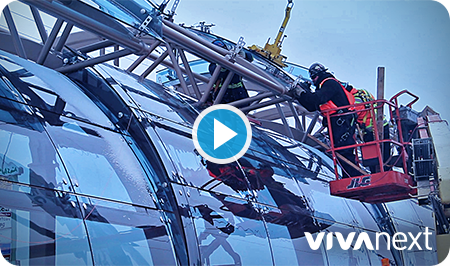
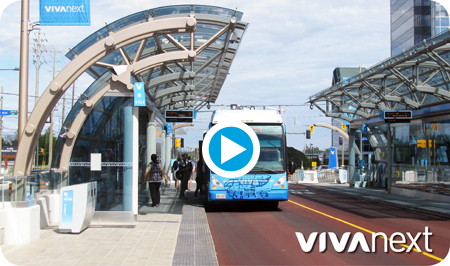
If it’s spring, it must be paving season! [see the video]

It’s not unusual for us at vivaNext to get very excited about paving season because it is always a good news story. The fact is construction can be dusty and disruptive – but, just like seeing the leaves open up on the trees in spring – the surest sign that the heavy construction is nearing its end is when the paving crews arrive.

Currently, as platform construction continues for the future vivastations along Highway 7 in Vaughan, the next segments of base-layer paving have begun between Edgeley Blvd./Interchange Way to Keele St. This paving will be completed in sections over the next two months and will include closures and detours.

One question you may be asking is why do crews revisit a section once it’s paved? The process happens layer by layer, which is why the crews will come back to the same location more than once. Because Highway 7 has to bear the load of regular traffic and heavy vehicles, we need to start with a solid base layer to make sure the road holds up over time.

To create the red pavement on the rapidways, we use a special pigment that is carefully mixed to achieve the right balance of rich red and rugged durability.

Each step needs to be done in sequence, and takes a certain amount of time. While the paving itself doesn’t take more than a few hours, fresh pavement can’t handle traffic right away. Also, we plan the work outside of busy business traffic times of the week, and the day – for example, crews typically work overnight and on weekends – weather permitting.

To stay informed about the paving activities along Highway 7 in Vaughan this spring and summer, check out our paving page at vivaNext.com/paving7. On vivanext.com you can also find Davis Drive paving and construction info, and sign up for construction updates.


Categories
Community Events

time for some family fun…

time for some family fun...

York Region’s Public Works and Emergency Medical Services [EMS] departments are hosting a Family Fun Day this weekend, and we’ll be there too to help recognize the importance of these services, and to have some fun!

We hope you can drop by our booth while you’re there, and be sure you take part in some of the activities, including:

  • Give transit a try and ride Viva through the bus wash facility in Newmarket [we especially recommend this activity!]
  • Tour the facilities at 80 and 90 Bales Drive, and see interesting equipment and vehicles
  • Watch or take part in the bike rodeo and bike helmet demonstrations
  • Food and refreshments at a charity BBQ [11:30 – 2pm]
  • Free garden mulch with a donation, and contests and prizes
  • Meet Pylon Pete, Barkley the Tree and Parry the Paramedic

So let’s enjoy the nice weather, spend quality time with family, and come see some of York Region’s services. We’ll see you there!

For detailed information about York Region’s Family Fun Day, visit York.ca.


Categories
Going Green

greenery all around us

greenery all around us

Most people see the environmental benefits of having greenery around us. Trees and shrubs help to filter the air and water, and provide shade and habitat for animals and birds. But when you look at a tree, shrub or plant, it doesn’t bring to mind the economy. Last year, a report from TD Economics calculated that in Toronto, a single tree returns from $1.35 to $3.20 per every dollar spent on maintaining the “urban forest,” and the returns for Halifax and Vancouver were even higher. It also noted the higher value of real estate in neighbourhoods with mature tree canopies.

There are environmental benefits and economic value, and then there’s the intangible – the way we feel when we’re on a tree-lined street and the satisfaction we get from watching the seasons change. We may not look forward to snow, but you can’t deny it looks nice on tree branches.

If you’ve ever planted a garden, you know that every plant isn’t always successful, especially after a harsh winter. Along the new Highway 7 East rapidway in Markham and Richmond Hill, we’ve planted almost 300 trees and thousands of perennials and grasses. We use soil cell technology to ensure trees have the best chance at survival, and the types of trees and shrubs are selected carefully. Even so, sometimes a few don’t make it through the winter, in which case we replace them under the two-year warranty we have for all of our trees, shrubs and plants.

In the next couple of weeks, our landscaping crews will be out on Highway 7 to help the new greenery on Highway 7 East thrive for many years to come. Whether you’re walking through a forest or travelling Highway 7 East, we hope you connect with nature now that spring is finally, [finally!] here.


Categories
Construction Fun & Games

bringing rapid transit to your doorstep… a behind the scenes look at building a vivastation

Bringing rapid transit to your doorstep… a behind the scenes look at building a vivastation

Throughout the fall and winter, crews have endured every kind of weather Mother Nature has thrown their way, while installing the vivastation at Longford/Parkside and Davis. There are many detailed steps to constructing a vivastation, and as we shared with you last year, it takes careful planning and precision throughout those stages of the construction.

We’ve captured components of the delivery, installation and construction for the west and eastbound platforms at Longford and Davis on video to provide you with a behind-the-scenes look and better understanding of what it takes to build a vivastation. All of the vivastations that are built as part of the vivaNext bus rapidway project are an important component of the top-notch transit system in York Region. When the Davis rapidway is in service this December 2015, transit users will enjoy the convenience of the new-technology and innovative features that each Viva vehicle and vivastation offers.

As you can see in the video, the vivastation was constructed piece-by-piece, like a puzzle, and crews will continue braving the elements to add the finishing touches to the west and eastbound platforms at Longford/Davis throughout the year. The vivastations at Main and Southlake Regional Health Centre are also progressing right on schedule and will give transit riders all the same conveniences.

By the end of the year, Viva will be running on Davis Drive from Yonge Street to Highway 404 and residents and visitors to the area will begin to experience the benefits of having rapid transit at their doorsteps. We know living through construction hasn’t been easy and we’re grateful for everyone’s patience as we work as quickly as possible to complete this large undertaking.


Categories
General Studies Urban Planning

how transit and city planning work together

how transit and city planning work together

An exciting new urban planning report — Make Way for Mid-Rise: How to build more homes in walkable, transit-connected neighbourhoods proposes actions that would help increase density along transit lines in the Greater Toronto Area. The report was released by the Pembina Institute and the Ontario Home Builders’ Association on Monday, May 4.

The nugget of this report is that the range of affordable housing choices for families would increase by building mid-rise, mixed-use buildings along transit lines. The report argues that mid-rise development supports “healthy lifestyles and local economies, since it can help increase walkability and put more people close to transit, while also supporting local business.”

So, should our communities “make way for mid-rise”? If we want our cities to have a better chance of developing the type of population density that supports a healthy neighbourhood with street life, walkability, and good transit, then, yes!

As the populations of York Region and the Greater Toronto and Hamilton Area increase, it’s the job of government, urban planners, and developers to ensure that the community infrastructure is properly accommodated, and resources like farmland and clean water are protected.

The Make Way for Mid-Rise report presents five ways to support increased density:

  1. Require minimum densities along rapid transit lines
  2. Eliminate minimum parking requirements
  3. Pre-approve mid-rise development along avenues and transit corridors
  4. Require retail planning before mid-rise is built
  5. Make parkland dedication rules more equitable

When transit planning and urban planning work together, the result can be what vivaNext is all about: great cities and great transit, hand in hand.

Take a few moments to check out the report, Make Way for Mid-Rise, and read more about the proposals in the Toronto Star.


Categories
Community Events Going Green

Earth Day and every day

Earth Day and every day

This April 22 marks the 45th Earth Day – the 1970 event that served as a catalyst to the global environmental movement. This year, according to Earthday.org, it’s expected that a billion people will be participating in Earth Day activities, which makes it not just the largest environmental event in the world, but the largest “civic observance”.

The very idea of all those people celebrating with activities and activism warms our collective hearts here at vivaNext. According to Earthday.ca, in Canada alone, more than six million people will be participating in an Earth Day activity in their community.

If you’re also a tree-lover, plant-lover, cyclist, or transit geek, you probably feel as strongly about Earth Day as we do – Earth Day shares so many of the vivaNext goals. And every year, the arrival of Earth Day serves as a springtime reminder that we’re on the right track, as we continue building transit and reducing the need for car traffic, protecting or enhancing the natural environment, promoting smart growth, and building vibrant, livable cities, and healthy communities.

On Earth Day and every day, we continue to do our best to create rapid transit that provides our communities and citizens with a green travel option that’s convenient, and that helps to improve how residents get around York Region.

Interested in greening up your commute even more than you are currently? Earth Day Canada is presenting their annual Clean Commute challenge. The Clean Commute toolkit provides 25 ways to reduce your carbon footprint, plus you’ll find out the carbon reductions that can be achieved. Every effort is a step in the right direction.  Join us in making a difference.

Happy Earth Day, everyone!


Categories
General

numbers, numbers… how we report progress

numbers, numbers… how we report progress

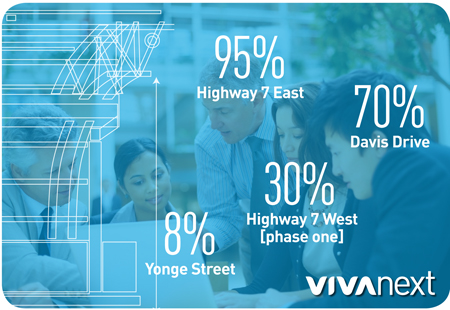
We recently updated the percentages on our website that show how far along each of our rapidway projects are: Highway 7 East is 95%, Highway 7 West [phase one] is 30%, Davis Drive is 70% and Yonge Street is 8%. It might make you scratch your head, since some of these projects appear to be more, or less, advanced than these percentages reflect. And in some cases, progress doesn’t show up in the percentages.

The percentages are updated quarterly, and are based on each project’s budget and how much has been billed. To stay open and transparent about our budgets and project progress, we report these percentages and information about construction milestones to our Board of Directors. Once our quarterly reports are presented to the Board, to Metrolinx, and to York Region Council they’re available to the public [posted here on our website]. There are variations from time to time – for instance, in our most recent report, we reported on the third and fourth quarter of 2014 together because there was no Board meeting in the fall.

As for the progress of each project:

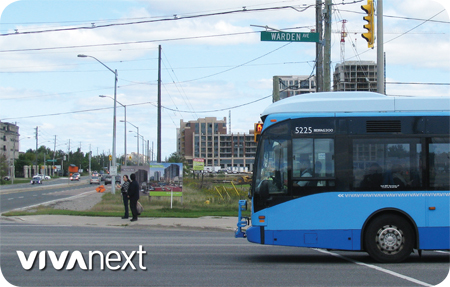
  • The Highway 7 East rapidway is fully in service, and now that the snow is gone crews are completing some top-layer paving and sidewalk/landscaping work near Warden Avenue, taking care of the last 5%.
  • The percentages for the Davis Drive and Highway 7 West rapidway projects didn’t change between the third and fourth quarters of 2014, but as anyone knows who spends time on these roads, crews have been working through the winter and progress has been made [just not reflected in the budget or billing yet].
  • At just 8%, the Yonge Street rapidway is just getting started and for the next several months much of the progress will be with relocating and updating utilities in preparation for road widening.

When working along streets that are heavily travelled, in ever-changing weather, digging into underground infrastructure, there’s always a chance of delays along the way. But by keeping track, and reporting our progress, we can make sure everyone knows how it’s going.


Categories
Stations Urban Planning

why stop here?

why stop here?

Some of the most successful investors will tell you that thinking long-term is the best way to make decisions. That’s also the route transit planners take, and a long-term increase in passengers is the goal for the investment.

Rapid transit routes are also planned with potential growth opportunities in mind. By looking at municipal zoning and ‘big picture’ plans, higher levels of government and planners can see where higher-density residential and commercial development will be located in the future. They look at the area around each proposed station to see if it seems likely to redevelop into higher-density residential and commercial destinations. Key pointers tend to be municipal zoning that allows for multi-story buildings, large lot sizes, and older buildings that are more likely to need rebuilding or refurbishing. Stations are especially considered at junctions where current or future transit lines intersect. The area may already have urban amenities and high population, or in some areas, empty land is zoned for a planned high-density community. It’s not necessarily about what’s there now, it’s about what could be there.

By studying the facts, transit planners can be confident about where transit stops should be placed, and know that as the community evolves in future years, new developments will naturally make it more compact, transit-oriented and pedestrian-friendly.

In York Region, the location of rapid transit routes is studied carefully to ensure that as our population continues to grow in the long-term, we’ve invested in a great transit system to support it. The Viva routes were planned with that in mind and now with ridership increasing steadily, rapid transit is moving to one dedicated lane in the centre of the road. With this comes a balanced community that provides vibrant urban centres, faster travel choices, and routes that have more connection points and better serve customers